

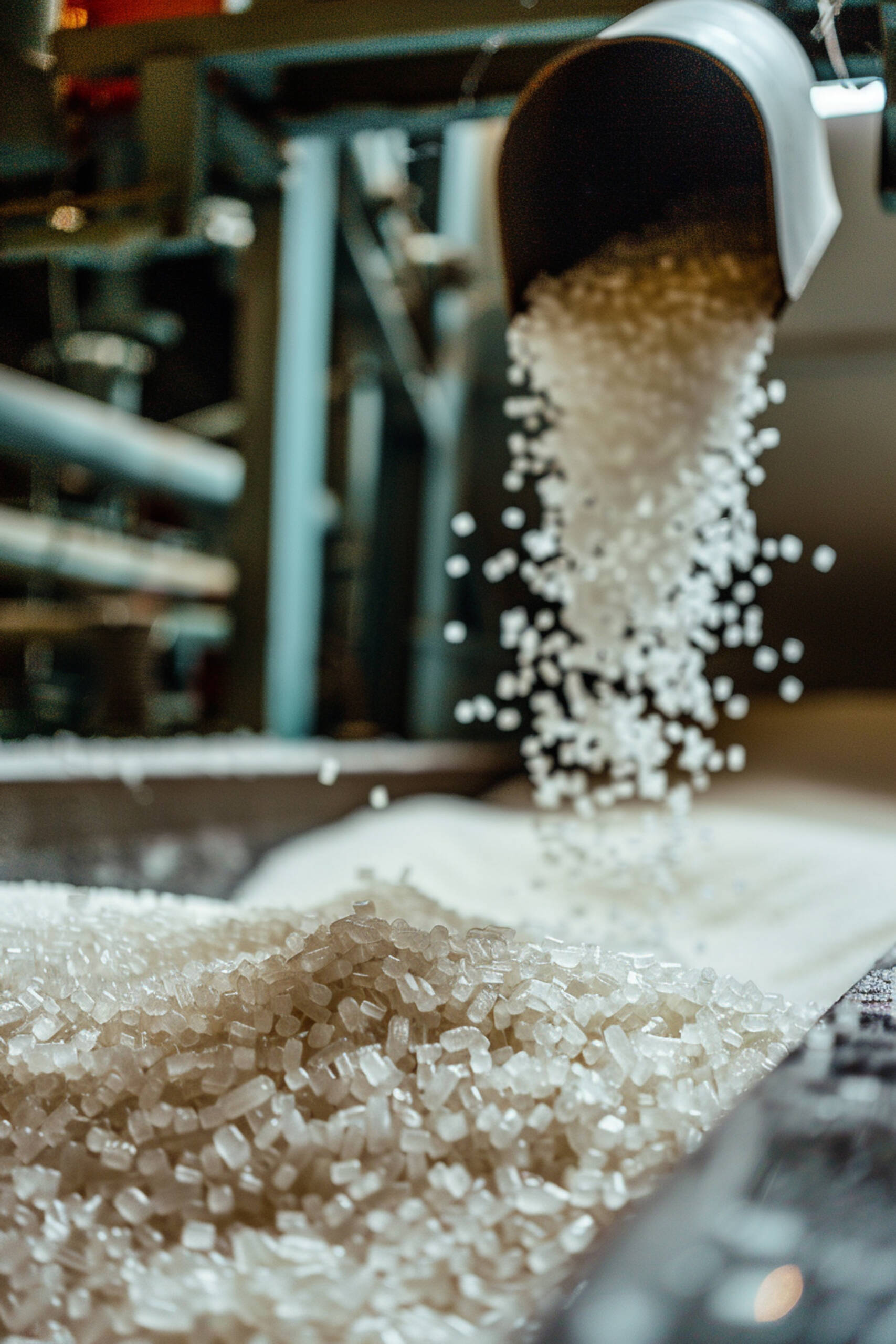
We support companies developing or improving thermoplastic materials, when performance, processing stability, scale-up, or sustainability become difficult to manage internally
WHAT WE SOLVE – selected examples
- Unclear material selection and application-driven formulation strategy
- Formulations that perform in screening but fail under real processing or service conditions.
- Sustainability- or compliance-driven material substitutions that introduce property drift, instability or trade-offs.
- Compatibility, dispersion, or morphology problems in blends, compounds, and recycled-content systems, leading to performance inconsistency
- Processing instability in compounding, extrusion, or injection molding, leading to quality inconsistencies, elevated scrap rates, and cycle-time inefficiencies.
- Multi-property optimization problems where thermal, mechanical, optical, rheological, electrical, or barrier targets are difficult to balance.
- Scale-up related changes in material structure, behavior or final performance.
WHAT WE DO
- Material selection and application-driven formulation development
From early-stage concept design, through scale-up and industrial validation, guided by disciplined optimization of structure–process–property relationships under realistic processing and service conditions for targeted applications
- Formulation redesign & performance stabilization
Optimization of thermoplastic systems (e.g., TPU, PVC, polyolefins, biopolymers, engineering compounds) to preserve performance and process stability when replacing critical formulation components or introducing new material inputs.
- Compatibility engineering
Design of blends, compounds, and recycled-material systems through targeted formulation architecture, interfacial optimization, and dispersion strategy.
- Process optimization
Enhancement of compounding, extrusion, and injection molding stability through coordinated optimization of formulation architecture and critical processing parameters.
- Performance optimization
Optimization of thermal, mechanical, electrical, optical, rheological, or barrier performance through structured multi-constraint analysis and structure–property-driven material design.
- Scale-Up optimization
Analysis of shear exposure, thermal history, and material structural evolution to prevent degradation, morphology drift, and performance loss during industrialization.
Typical Outcomes
- Industrial-ready formulations
- Performance stability under material changes
- Controlled blend compatibility and morphology
- Robust processing windows
- Controlled scale-up behavior
- Balanced multi-constraint performance
- Clear technical decision pathways
Material examples we commonly work with
TPU, PVC, PP, PE, polyesters, polyamides, biopolymers (e.g. PLA/PHB/TPS), and filled/functional compounds & composites.